
Independent advisory services for management teams in connection with ownership changes and the implementation of investment programs
Through our design of equity-based long-term incentive programs ahead of a forthcoming sale, we apply one of the most powerful tools of the Private Equity model to privately owned companies.
We act as the management’s own advisor throughout the entire process of an ownership change, where a new owner is expected to want senior executives and key personnel to invest alongside the buyer.
Our work begins with a structured preparation phase. In this phase, we assist in identifying which group of individuals may be included in a Management Incentive Program (MIP) and prepare them for what the process entails in terms of content, timeline, and expected decisions.
During the transaction, we analyze and compare the offers made to the participants and manage management’s discussions regarding the design of the program to ensure the best possible terms. We serve as a qualified discussion partner in dialogue with owners and their advisors, while also ensuring that management has access to its own legal and tax advice.
An ownership change is often very labor-intensive for top management. In parallel with their operational responsibilities, management is expected to contribute to the company’s review and due diligence process.
Therefore, we relieve the CEO and CFO in the implementation of the incentive program, ensure that information to participants is clear and consistent, that questions are handled in a structured manner, and that the decision-making process is coordinated.
Our focus is that every participant should have a sufficient and well-prepared basis for making a well-informed investment decision.
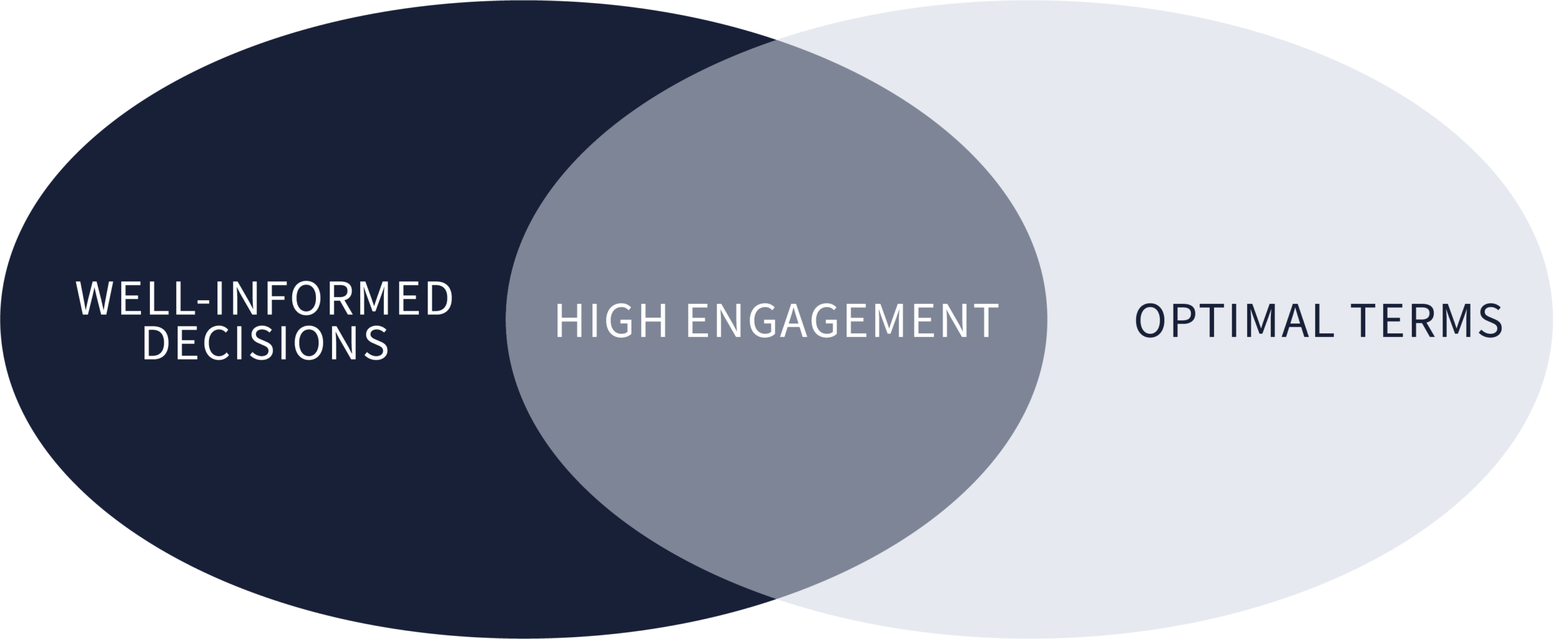

Our advisory services create better terms and clarity for management in a complex and time-pressured situation. Through increased understanding of conditions, risk and potential upside, management’s decision-making and ability to act from a professional position are strengthened.
When participants fully understand the program, involvement, willingness to invest, and engagement all increase. This leads to incentive programs that work in practice and contribute to long-term value creation – for both principal owners and management.
Ownership changes often involve decisions with significant personal and financial consequences for management. These decisions are usually made in a process that fails to take the needs of program participants into account, as the parties to the transaction typically have principals whose interests do not align with those of management. This often leads to a process with major shortcomings:
This often results in processes with several recurring challenges.
Time pressure – The process surrounding management's investments is often initiated too late, resulting in short decision windows and insufficient decision-making material.
Information asymmetry – Differences in knowledge about the structure and terms of the program are often substantial, both between buyers and participants and within the group of participants.
Conflicts of interest – Management often seeks advice from other parties in the transaction, whose assignments and loyalty primarily lie with other stakeholders, not with management.
Guarantee issues – In practice, the CEO and CFO are often expected to “sell” the program to other participants, despite having limited mandate and support.
Key personnel management – In Buy & Build situations, the question arises early on as to which individuals should be included in an MIP. The CEO is often expected to define this group, which, without structured support, is both difficult and sensitive.
Market practice – The principal owner presenting the program often lacks an up-to-date view of how terms and structures have evolved over time in the market.
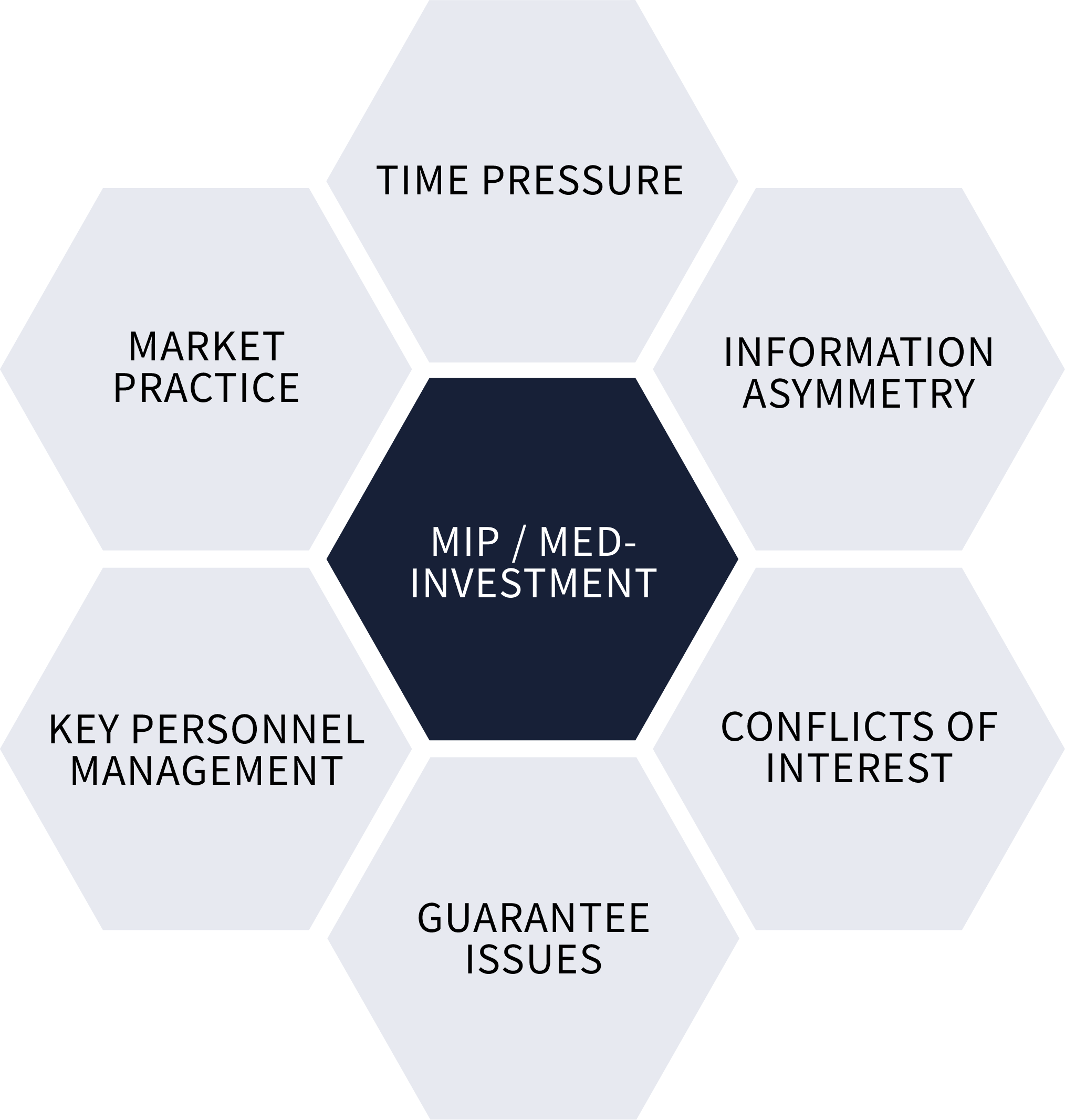
Without the right support, management incentives risk being unclear, unbalanced or ineffective. Uncertainty regarding terms and structure often leads to cautious investment decisions and reduced engagement, which undermines the program’s purpose and its value creation potential.
Our advisory services fill this gap. By representing management, we ensure optimal terms and that decisions are made on the proper grounds, with full understanding of the consequences. This creates better conditions for individuals, strengthens relationships with owners and contributes to a more successful company following the ownership change.
Vi hjälper ägarledda bolag att förbereda sig inför en framtida exit genom att utforma attraktiva, långsiktiga och aktiebaserade incitamentsprogram för ledning och nyckelpersoner.
Vårt fokus är att skapa program som driver engagemang, värdeskapande och finansiell utveckling inför en kommande försäljning.
Genom att kombinera en tydlig exit-horisont med en förankrad affärsplan och ett genomtänkt incitamentsprogram skapas förutsättningar för att maximera bolagets värde vid en transaktion. Genom att föra in Private Equity-logik i privatägda bolag utformas programmet med ledningens perspektiv i åtanke och med en struktur som är lätt att förstå, attraktiv att delta i och enkel att följa upp.
The objective is for the incentive program to achieve high participation rates, have a reasonable investment cost, clear upside potential, and a balanced risk profile.
The result is a stronger management team, increased focus on value-creating activities, and a company that is better positioned for an exit.
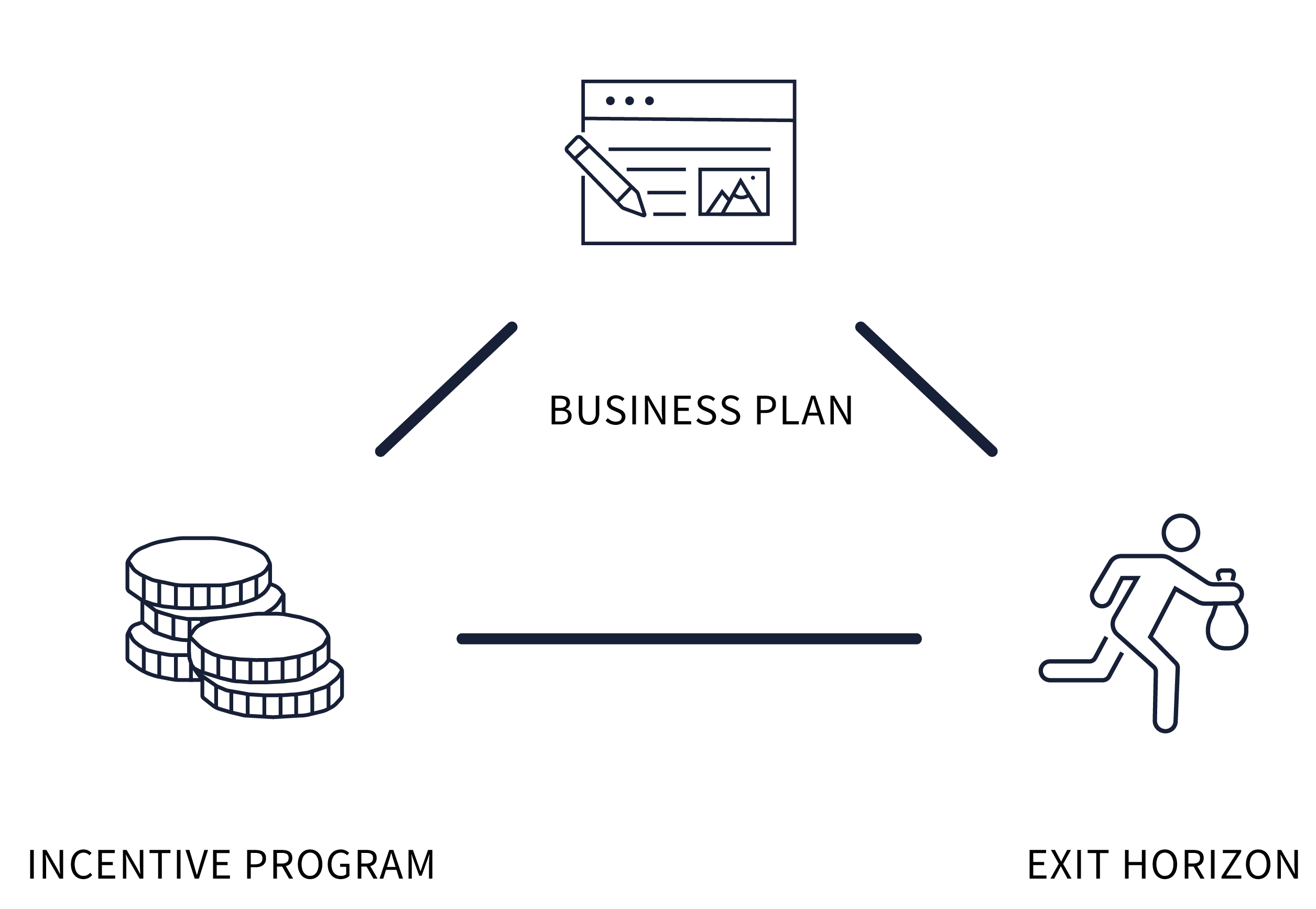

We apply one of the most powerful tools of the Private Equity model in privately owned companies. By implementing strategic incentive programs well in advance of a sale, we create the structure required to maximize the company’s value at exit – for both owners and management.
The objective is for the incentive program to achieve high participation rates, have a reasonable investment cost, clear upside potential, and a balanced risk profile.
The result is a stronger management team, increased focus on value-creating activities, and a company that is better positioned for an exit.